
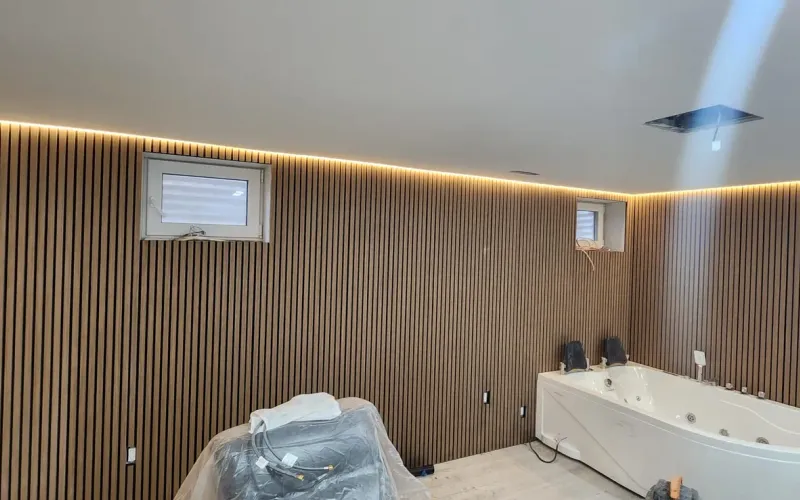
Basements
Basement Moisture: What to Fix Before You Finish the Space
Where basement moisture in a Toronto home comes from, how to test for it, which fixes go outside and inside, and how to build walls that stay dry after.
Read the guide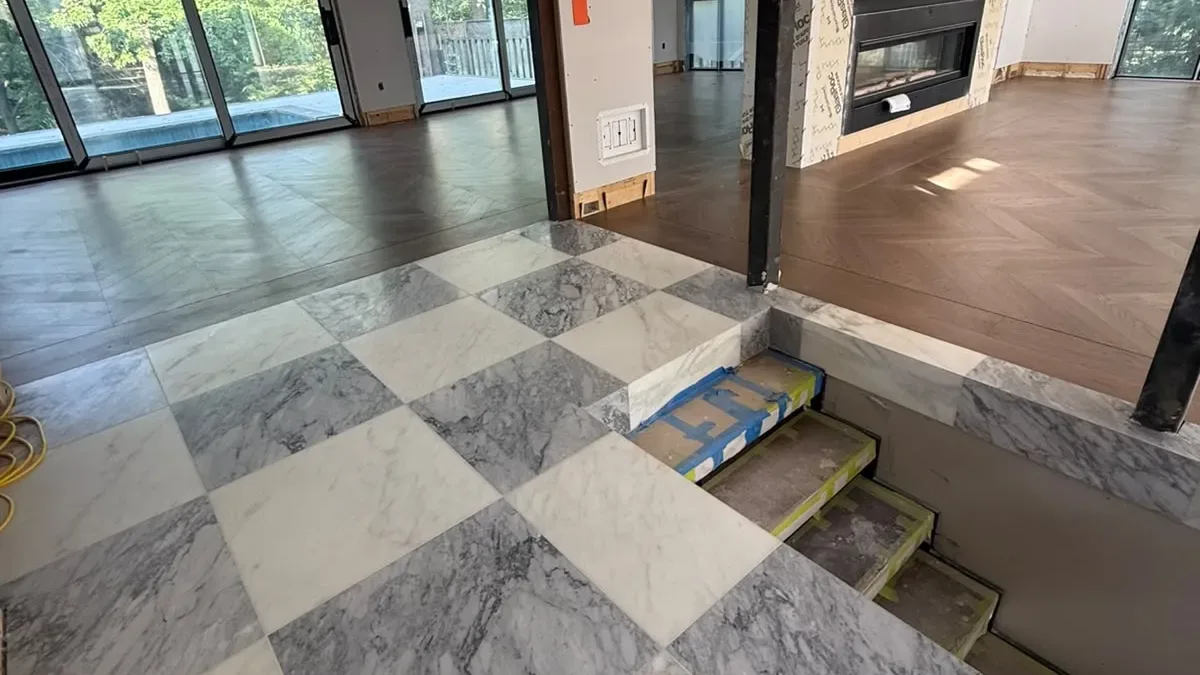
Which flooring holds up to road salt, slush and the dry-winter, humid-summer swings of a Toronto house, room by room, and the installation steps that matter.
Flooring · September 28, 2026 · 9 min read
A floor in the GTA has two jobs most catalogues never mention. From November to April it takes slush, grit and road salt carried in on boots. All year it lives through a humidity swing: bone-dry heated air in January, damp air in July. Choosing flooring in a Toronto home means choosing a material that handles both, and putting each material where it belongs.
Below: what salt and humidity actually do to a floor, how the common materials compare, which floor suits which room, and the installation details that decide whether a good product lasts or starts to gap, cup or stain after its first winter.
Salt harms a floor in three ways. The grit that comes with it scratches finishes like sandpaper under a boot heel. The meltwater sits on the surface and gets into seams and joints. And when that water dries, it leaves a white film that dulls finishes, and some de-icers keep drawing moisture back to the spot, so it never quite dries.
Most Toronto sidewalks and driveways are treated with rock salt (sodium chloride), and some products add calcium or magnesium chloride, which work at lower temperatures. The chloride de-icers attract moisture from the air, which is why a salt stain by the door can look damp days after the last snowfall. On a site-finished hardwood floor, the white haze sits in the finish, and repeated wetting at the same spot wears through it. On laminate and some click floors, the risk is at the joints: water that sits in a seam can swell the core, and a swollen edge does not go back down.
Natural stone has its own issue. Calcite-based stones such as marble and limestone are softer and more reactive than porcelain, and salt water drying inside the pores of an unsealed stone can pit and dull the surface over time. That does not rule stone out of a house, but it does mean an unsealed stone floor right inside a busy winter door will need more care than porcelain in the same spot.
Wood takes on moisture from the air and gives it back, so it shrinks when the air is dry and swells when it is damp. In a heated Toronto house in January, indoor humidity can fall well below the range most wood floor makers ask for; in a humid summer it climbs above it. The result is gaps between boards in winter and cupping or crowning in summer.
Small seasonal gaps in solid hardwood are normal and close again in spring. Wide gaps, boards cupping (edges higher than the centre) or crowning (centre higher than the edges) point to humidity swings that are too large, or moisture coming from below. Wood flooring makers usually state an indoor relative humidity range in their installation instructions, often somewhere around 35 to 55 per cent. The number differs by product, so the one that matters is printed on the box you are buying.
Keeping a floor inside that range is mostly a mechanical question: a humidifier on the furnace or a standalone one in winter, air conditioning or a dehumidifier in summer, and a hygrometer so you see the actual number instead of guessing. Materials other than wood react far less. Porcelain tile does not move with humidity at all. Vinyl and rigid-core planks move more with temperature than with humidity, which matters beside large sunny windows.
Porcelain tile is the most tolerant of both: it barely absorbs water, ignores humidity and stands up to grit, provided the grout is sealed or epoxy. Rigid-core vinyl plank handles water well at the surface. Engineered hardwood copes with humidity better than solid. Solid hardwood and laminate are the most sensitive at a winter entry.
| Material | Salt, slush and grit | Humidity swings | Where it works best |
|---|---|---|---|
| Porcelain tile | Very resistant; the grout lines are the weak point unless sealed or epoxy | Unaffected | Front entries, mudrooms, back doors, laundry rooms, basements, bathrooms |
| Natural stone (marble, limestone, slate) | Varies by stone; calcite-based stones etch and dull, all need a sealer maintained | Unaffected | Entries and feature areas where the owner accepts regular sealing and care |
| Rigid-core vinyl plank (SPC/WPC) | Water-resistant surface; grit scratches the wear layer, water can reach the subfloor through seams | Little effect; moves more with heat and direct sun | Basements, condos, kitchens, rentals, busy family areas |
| Engineered hardwood | Finish is as sensitive as solid wood; standing meltwater still damages it | More stable than solid thanks to its cross-layered core | Main floors, condos, over concrete and radiant heat where the product allows it |
| Solid hardwood | Finish hazes and wears where salt water sits; boards stain if water stays in seams | Most movement: winter gaps, summer cupping if humidity is not controlled | Living, dining and bedrooms on wood subfloors, away from the door |
| Laminate | Surface resists scratches well; the fibreboard core swells if water sits in the joints | Moderate | Bedrooms and upper floors; water-resistant lines are better, but still not a slush zone |
| Carpet | Holds salt and meltwater in the fibres and pad | Unaffected, but traps moisture over a damp slab | Bedrooms and stairs well away from any entry |
The first few steps inside any door used in winter should be a hard, non-absorbent surface: porcelain tile is the usual answer, with a textured or matte finish so wet soles do not slip. The tile zone should be long enough that boots come off before anyone steps onto wood, and the change to the next floor should be a clean, level transition.
How far the tile runs is a design decision worth making on purpose. A small square just inside the door fills with slush and people step off it still in their boots. A zone that fits a boot tray, a bench and room to turn around keeps the water where it can be wiped up. A few details make a big difference at an entry:
Tile is covered in more detail on our tiling installation page, and the full range of materials on flooring installation.
Match the floor to what each room is exposed to. Entries and mudrooms get salt and water, so tile. Kitchens get spills and dropped pans, so tile, engineered wood or rigid-core vinyl. Living areas and bedrooms get mainly humidity changes, so wood works there if humidity is managed. Basements sit on a cool slab, so tile or vinyl over a subfloor system.
| Room | Main exposure | Materials that fit | What to watch |
|---|---|---|---|
| Front entry, mudroom, back door | Slush, salt, grit, standing water | Porcelain tile; sealed stone with care | Slip resistance, grout sealing, the transition to the next floor |
| Kitchen | Spills, dropped items, dishwasher leaks | Porcelain tile, engineered hardwood, rigid-core vinyl | Continuity with the rest of the main floor; appliance water lines |
| Living and dining rooms | Humidity swings, sunlight | Solid or engineered hardwood, rigid-core vinyl | Indoor humidity in winter and summer; fading near large windows |
| Bedrooms | Mainly humidity | Hardwood, engineered, laminate, carpet | Underlay for sound if there is a room below |
| Bathrooms and laundry | Water on the floor, steam | Porcelain tile | Waterproofing under the tile in wet areas; floor drains where used |
| Basement | Cool slab, possible dampness, flooding risk | Porcelain tile, rigid-core vinyl, engineered products rated for below grade | Moisture testing before anything is laid; a subfloor system for warmth |
| Condo unit | Dry heated air, sound to neighbours | Engineered hardwood, rigid-core vinyl, tile | The acoustic underlay the building requires |
Basements deserve their own planning, since the slab is the biggest source of moisture a floor will ever face. The testing is set out in our guide to basement moisture before finishing. In a condo, the board usually decides the underlay before you decide the floor; condo renovation rules covers what to ask for.
Most floor failures in the GTA come from installation, not the product: wood laid before it adjusted to the house, a subfloor or slab that was too wet, no expansion gap at the walls, or tile laid over a floor that flexes. Checking moisture before installation and following the maker's instructions to the letter prevents most of them.
These steps take time, and a quote that goes straight from "remove old floor" to "install new floor" has usually left them out. Our guide to reading a contractor quote shows what a complete scope looks like.
Sweep or vacuum the grit first, so you are not grinding it in with a mop. Then wipe the white residue with a damp mop and a cleaner made for that floor type, and dry the surface afterwards. On wood and laminate use as little water as possible. On natural stone avoid vinegar and other acidic cleaners.
If you are planning a new floor as part of a larger home renovation in Toronto or the GTA, you can see finished floors in the project gallery and get in touch to talk through which material fits each room of your house.
Porcelain tile is the most practical choice for the first few steps inside a door used in winter. It barely absorbs water, is not affected by road salt or humidity, and stands up to grit. Choose a slip-resistant finish rather than a polished one, seal cementitious grout or use epoxy grout, and make the tile zone large enough that boots come off before anyone steps onto wood.
Wood shrinks when the air is dry, and a heated house in a Toronto winter can have very low indoor humidity. Small gaps that close again in spring are normal for solid hardwood. Large gaps, or cupping in summer, mean the humidity swing is too big. Most wood flooring makers list an indoor humidity range in their installation instructions, and a humidifier in winter with a hygrometer to check the level keeps the floor closer to it.
Engineered hardwood is more dimensionally stable because its core is built from cross-layered wood, so it moves less with seasonal humidity and can often go over concrete or radiant heat where solid hardwood cannot. Its top layer is real wood, so it is just as sensitive to salt water and grit at an entry as solid hardwood. Neither belongs right inside a winter door.
Sweep or vacuum the grit first so it is not ground into the finish, then wipe the white residue with a damp mop and a pH-neutral cleaner suitable for that floor, and dry the surface. Use as little water as possible on wood and laminate, and avoid vinegar and other acidic cleaners on natural stone. Wash the entry mats too, since a salt-soaked mat keeps spreading salt back onto the floor.
Basements
Where basement moisture in a Toronto home comes from, how to test for it, which fixes go outside and inside, and how to build walls that stay dry after.
Read the guide
Kitchens
Quartz, granite, laminate or butcher block for a Toronto kitchen: how each handles heat, water, knives and stains, and what to settle before templating.
Read the guide
Kitchens
Plywood, MDF or particleboard cabinet boxes for a Toronto kitchen: how each one holds screws, handles water and takes an edge, and where it belongs.
Read the guide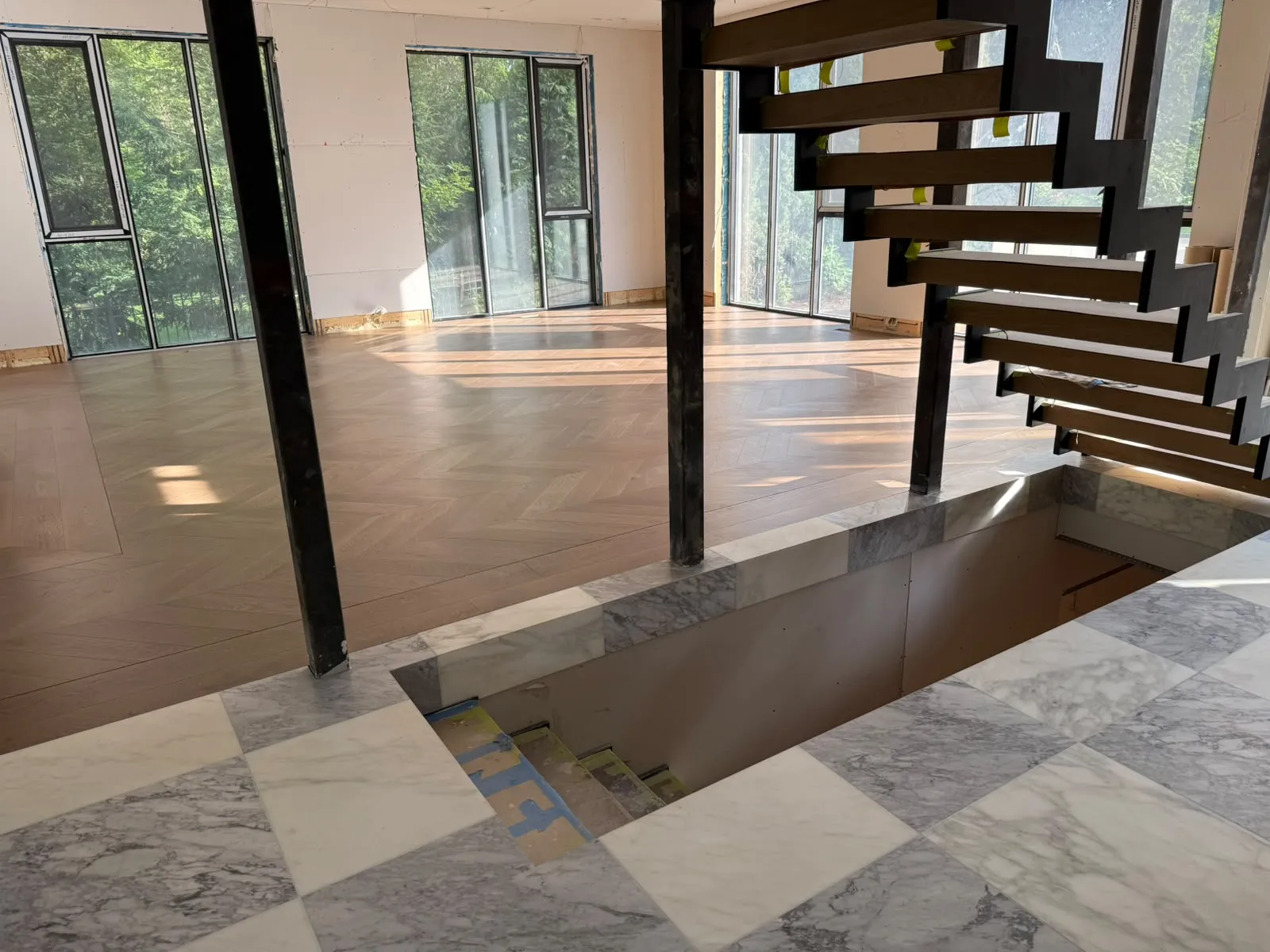
We will walk the space with you, tell you what it actually takes, and put it in writing.