
Basement Finishing
Basement apartment permit in Toronto: what the drawings have to show
What Toronto asks for in a basement apartment permit: the 45% zoning rule, each drawing sheet and form, and what gets measured in the house first.
Read the guide
Living in your house during a renovation in Toronto: dust barriers, noise hours, shut-offs, a temporary kitchen, kids and pets, and when moving out is wiser.
Planning · October 9, 2026 · 8 min read
Most families in Toronto and the GTA stay in the house while it is being renovated. It saves the cost and disruption of a rental, and it lets you see the work every day. It also means sharing your home with a crew, a dust barrier and a lot of noise for the length of the job. Living in your house during a renovation works well when both sides plan for it before the first wall comes down, and badly when nobody does.
This guide covers what actually changes at home: which rooms you lose, how dust is kept in, what the day sounds like, when water or power go off, how to eat without a kitchen, and the situations where moving out for part of the job is the better call.
Usually yes, as long as you keep one working bathroom, a place to sleep away from the work and a way to prepare food. The size of the job matters less than which rooms it takes away at the same time. A full gut of the only bathroom or a whole-floor renovation can make the house hard to live in for a few weeks, even if the project overall is modest.
| Project | What it takes from daily life | Staying is usually |
|---|---|---|
| One bathroom, with a second bathroom in the house | Morning queues, noise near bedrooms, short water shut-offs | Easy |
| The only bathroom | No shower or toilet for part of the job unless a temporary toilet is kept connected | Hard without a plan for the toilet |
| Kitchen | No sink, stove or counter for weeks; fridge moved to another room | Workable with a temporary kitchen |
| Basement | Dust rising through stairs and ducts, laundry and furnace access interrupted | Easy if the stair is sealed |
| Whole main floor, or the whole house | Kitchen, living space and entry all under construction together; longer power and heat interruptions | Possible in phases; often easier to leave for the heaviest stage |
With a sealed boundary, not with cleaning afterwards. The work area is closed off with plastic sheeting taped floor to ceiling, ideally with a zippered door, and the floors along the route the crew walks are covered. Heating and return-air vents inside the work zone are sealed so the furnace does not carry dust into the bedrooms.
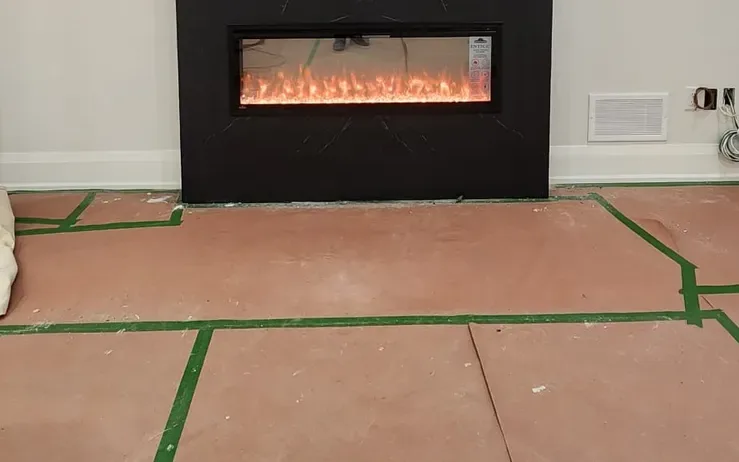
Fine drywall and tile dust still finds gaps, so expect a film on surfaces near the barrier. The measures below are the ones that make the biggest difference; ask how each one will be handled on your job.
Loud in bursts. Demolition, tile cutting and drilling into concrete are the noisiest stages, and they come early in the job. Finishing work such as trim, paint and fixtures is much quieter. In the City of Toronto, the noise bylaw limits construction noise to set hours, so the start of the day is predictable.
Set up a temporary kitchen in another room before demolition day, close to a sink if you can: a laundry tub, a bar sink or the bathroom. Plan simple meals around small appliances. Our kitchen renovation timeline shows the stretch when the kitchen is completely out of use.
Yes, for short periods, and you should hear about each one in advance. Plumbers shut the water off to cut in new lines, electricians turn circuits off to work safely, and a furnace or duct change interrupts heat. Ask that the long shut-offs are announced the day before and kept out of the evening.
| Service | Why it goes off | What to ask for |
|---|---|---|
| Water | Connecting new supply lines, replacing valves, moving fixtures | Shut-off valves on the lines to the work area so the rest of the house keeps water |
| Power | New circuits, panel work, moving outlets and lights | Notice before a full panel shut-off, and the fridge and freezer kept on a live circuit |
| Heat or cooling | Moving ducts, replacing the furnace, sealing vents against dust | A plan for cold nights in winter, such as a portable heater for the bedrooms |
| Gas | Moving a range, dryer or fireplace line | A licensed gas fitter, and every pilot relit before they leave |
Give each of them a part of the house the work never reaches, and keep the crew's route away from it. Most problems come from overlap: a child or a dog in the hallway the crew uses, or a video call next to a tile saw.
Open floor holes, nail guns, loose screws and extension cords are the real hazards. Keep children out of the work zone entirely, including after hours, when it looks quiet but is not finished.
Doors open and close all day, so a dog or cat can slip out without anyone noticing. Many owners keep pets in one closed room or with family during demolition. Tell the crew which doors must stay shut.
Ask for the noisy stages in advance and book calls around them. A room at the far end of the house, or upstairs when the work is in the basement, is usually quiet enough outside the loudest days.
When the work takes away the basics at the same time, or when the house holds materials that need careful removal. Many families stay for most of a project and leave only for its hardest stretch. These are the situations where a short stay elsewhere is worth considering.
Delays also change the picture. A plan to stay for a few weeks becomes harder if the job runs longer; our guide to why renovation timelines slip explains the usual causes.
Write down the house rules for the job on one page and go through it together at the start. Most friction between homeowners and crews comes from small things nobody mentioned: which door, which washroom, where to park, who has a key. Settling them early keeps the relationship focused on the work.
In a condo, the building adds its own rules on hours, elevator bookings and protection of common areas; see our guide to condo renovation rules and our condo and apartment renovation service.
Decide before the job which rooms stay yours, set up the temporary kitchen and the dust barriers on day one, and agree the house rules in writing. After that, the disruption is mostly noise and patience, and it ends when the last trade leaves.
Art Style Construction renovates occupied homes across Toronto and the GTA, from kitchens and bathrooms to whole-home renovations done in stages. If you plan to stay in the house through your project, book an on-site consultation and we will walk through how the work can be phased around the rooms you need.
Usually, if the work area is sealed off with plastic barriers, finished floors are covered and the crew leaves the house safe each evening. The exceptions are demolition in older homes that may contain lead paint or asbestos, and long stretches without heat, water or a bathroom. In those cases, staying elsewhere for that stage is the safer choice.
Toronto's noise bylaw allows construction noise from 7 a.m. to 7 p.m. on weekdays and from 9 a.m. to 7 p.m. on Saturdays. It is not allowed on Sundays or statutory holidays. Other GTA municipalities set their own hours, and condo corporations often set narrower ones for renovations inside units.
Set up a temporary kitchen in another room before demolition: the fridge on a circuit that stays on, a microwave and kettle, one cooking appliance such as an induction plate, a folding table as a counter and a tub for washing dishes. Keep meals simple and plan for the weeks when the kitchen is fully out of use.
Not necessarily for the whole job. Many families stay for most of it and move out only for the stretch when the kitchen and bathrooms are out at the same time, during floor refinishing, or during demolition in an older home. Phasing the work room by room can make staying possible for longer.
Basement Finishing
What Toronto asks for in a basement apartment permit: the 45% zoning rule, each drawing sheet and form, and what gets measured in the house first.
Read the guide
Bathroom Renovations
How many CFM a bathroom exhaust fan needs, why it moves less air than the box says, where the duct must end, and how to test the fan you have now.
Read the guide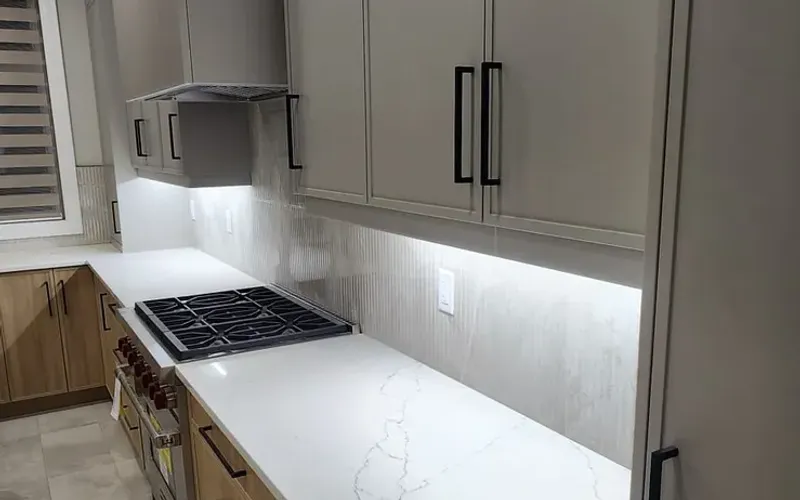
Kitchen Renovations
How to decide whether to paint, reface or replace kitchen cabinets: what to check inside each box, what every finding means, and what moves when boxes come out.
Read the guide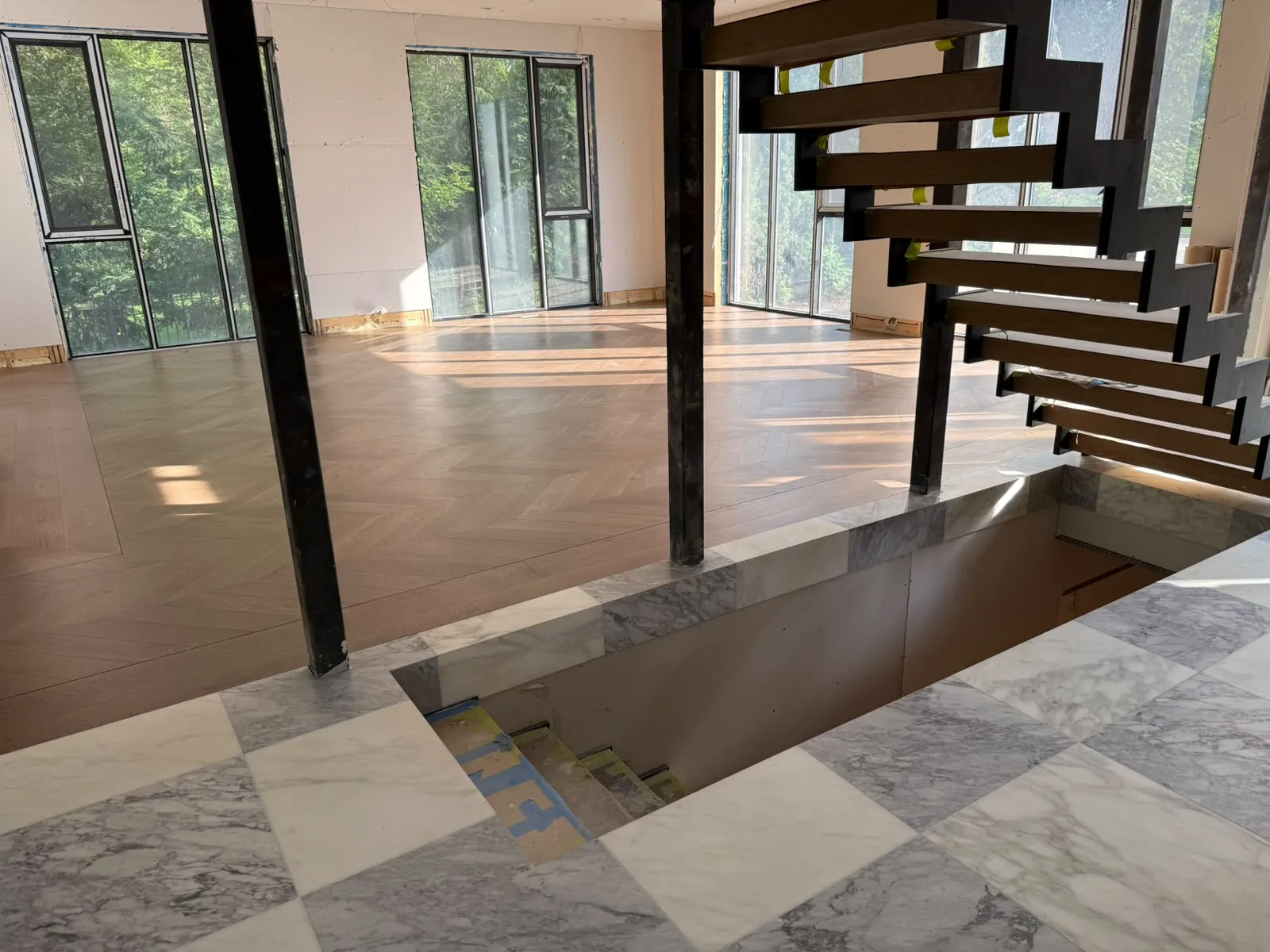
We will walk the space with you, tell you what it actually takes, and put it in writing.