
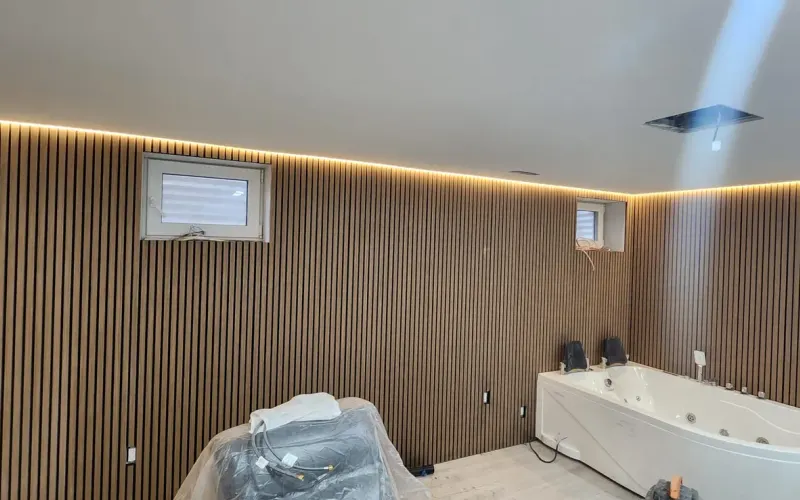
Basement Finishing
Basement apartment permit in Toronto: what the drawings have to show
What Toronto asks for in a basement apartment permit: the 45% zoning rule, each drawing sheet and form, and what gets measured in the house first.
Read the guide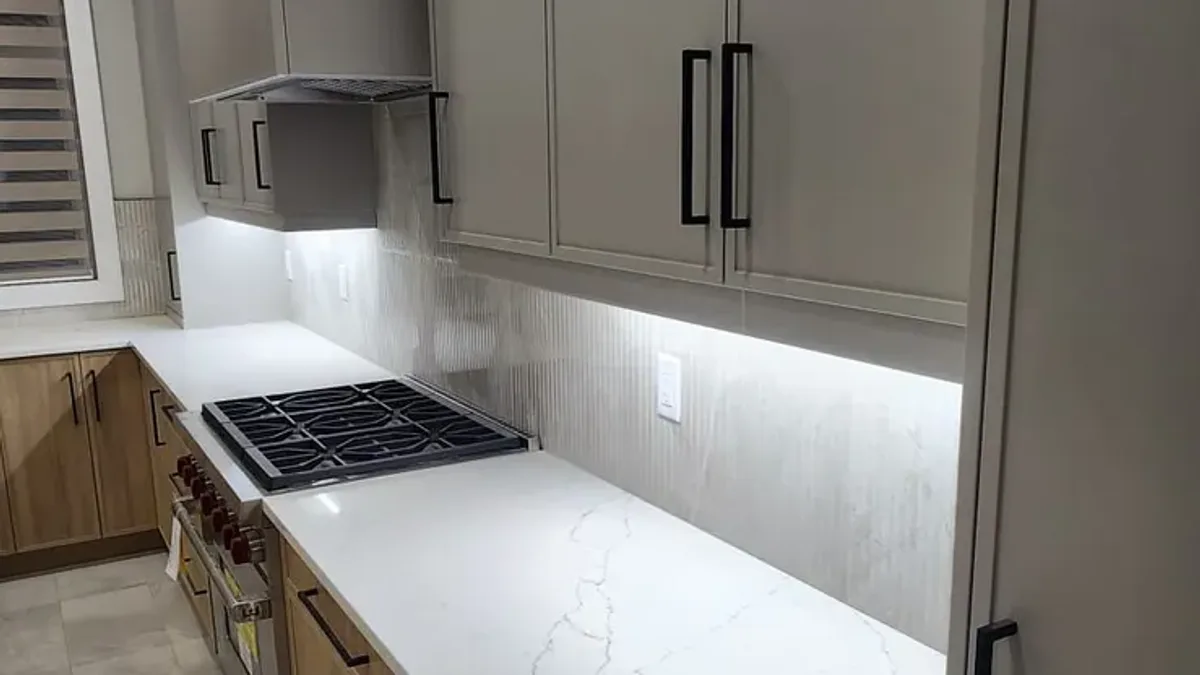
How to decide whether to paint, reface or replace kitchen cabinets: what to check inside each box, what every finding means, and what moves when boxes come out.
Kitchen Renovations · October 15, 2026 · 8 min read
Whether to paint, reface or replace kitchen cabinets is usually asked as a question about money. It is really a question about the boxes. Doors and drawer fronts are what you look at every day, but the boxes behind them carry the counter, hold the sink and take the water when something leaks. If the boxes are sound and the layout works, you have three options. If they are not, you have one.
So before asking anyone for a price, open every door, pull every drawer out, empty the sink base and look. This guide walks through what to check, what each thing you find means for each route, and what else in the room is affected when boxes come out.
Painting keeps everything and changes the colour. Refacing keeps the boxes and replaces what you see: new doors, new drawer fronts, a new skin on the exposed sides and face frames, usually new hinges and pulls. Replacing takes the boxes out and builds the kitchen again, which is the only route that can change where things are.
Stays: boxes, doors, drawers, layout, counter.
Changes: the colour and the hardware.
Cannot fix: a door style you dislike, warped or delaminating doors, anything inside the boxes.
Stays: boxes, layout, counter, usually the drawer boxes.
Changes: doors, drawer fronts, exposed sides, hinges, pulls.
Cannot fix: a soft sink base, sagging bottoms, a work path that does not suit how you cook.
Stays: the walls and, sometimes, the floor.
Changes: everything you store things in, and where it goes.
Brings with it: a new counter in most cases, and work on the backsplash, floor and services behind the cabinets.
Painting and refacing both depend on the same thing: boxes that are dry, square and still holding their screws. That is what the inspection below is for.
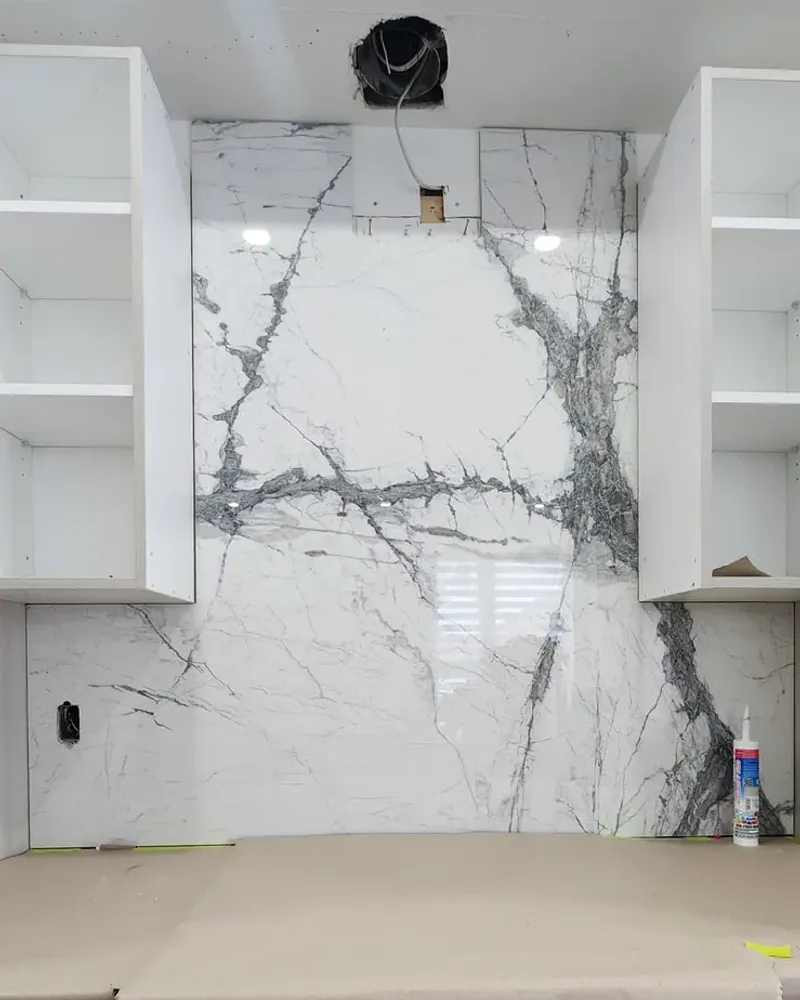
Work through the kitchen in this order. Start where water collects, finish with the uppers. You need a flashlight, a screwdriver and twenty minutes with everything emptied out.
Empty it completely and shine the light on the floor of the cabinet, the back corners and the bottom edges of the sides. Press the floor of the box with your thumb around the drain and the supply lines. Particleboard and MDF that have been wet swell and turn soft and crumbly at the edges; plywood tends to stain and lift in layers. A dark ring, a bulge or a spot that gives under your thumb means water got in. Check whether the leak is still active before deciding anything else: a slow drip under a sink will damage new cabinets just as quickly.
Look along every cabinet floor and fixed shelf from the side, at eye level. A bottom that dips in the middle, a shelf that has bowed under plates, or a joint where the bottom has pulled away from the side all tell you the box has stopped holding its shape. If you are not sure what the boxes are made of, the cut edges in the hinge holes will show you; our guide to plywood, MDF and particleboard cabinets explains what each material looks like and how it ages.
Pull each drawer all the way out and lift it off its runners if it will come. A drawer box with a loose or cracked bottom can be rebuilt on its own. Runners that drop, stick or have torn their screws out of the cabinet side are a sign the side panel is losing its grip on fasteners, and that matters more than the drawer.
Open every door and watch it. Doors that sag or will not stay adjusted usually mean the hinge screws have stripped the wood they sit in. If your cabinets have a face frame (a solid frame across the front of the box), check that it is tight to the box and not split. If they are frameless, with the doors covering the edges of the box, look at the front edges for chips and swelling, because new doors will sit right on them.
Hold the bottom of each upper cabinet and try to move it. It should not rock or shift. Upper boxes hang on screws into the wall, and a box that moves has either lost its screws or was never fixed properly. Look at the joint where the top of the cabinet meets the ceiling or bulkhead for cracks that have opened over the years.
Most kitchens have a mix of findings: a tired sink base and seven good boxes is common. Read the table row by row, and let the worst finding that cannot be repaired decide.
| What you found | Paint | Reface | Replace |
|---|---|---|---|
| Boxes dry, square and firm, you dislike only the colour | Fits | More than you need | More than you need |
| Boxes sound, door style or door surface is the problem | Does not change the style; peeling thermofoil cannot simply be painted over | Fits | Only if the layout also needs to change |
| Old water mark in the sink base, dry and firm | Fits once the source is fixed | Fits once the source is fixed | Not needed for this alone |
| Sink base swollen or soft, other boxes sound | Only with that one box rebuilt or replaced | Only with that one box rebuilt or replaced | Worth pricing next to a one-box repair |
| Several bottoms sagging or swollen | No | No | Fits |
| Hinge screws stripped in many doors | Only if the holes can be repaired first | Only if new hinges can bite into sound material | Fits if the sides are crumbling |
| Uppers loose on the wall | After they are refastened into studs | After they are refastened into studs | Not needed for this alone |
| Layout does not suit how you cook or store | No | No | Fits |
A single damaged box does not condemn a whole kitchen. A sink base can be rebuilt or replaced on its own, then painted or refaced with the rest, as long as the matching work is planned together and not discovered halfway through.
Sometimes the boxes are fine and the kitchen still does not work. New paint or new doors will not fix that, and it is better to find out now than after the money is spent. Stand in the kitchen and go through these questions honestly.
If two or more of these are a yes, the layout is part of the answer, and that points to replacing. Our guide to choosing a kitchen layout around how you cook goes further. Installing new cabinetry does not need a building permit in Toronto; moving plumbing or taking out a wall does, so a layout change that relocates the sink is a bigger job than one that only reshuffles boxes.
Replacing cabinets is rarely only a cabinet job. The rest of the kitchen was fitted around the old boxes, and some of it comes out with them. These are the parts to ask about before you compare replacing with the other two routes.
Painting and refacing leave all of this alone. That is often the biggest difference between the routes, and it is the part a quick quote for "new cabinets" can leave out.
Quotes for three different routes are hard to compare unless each one describes the same kitchen. Put these in your request so the answers line up.
The fourth question matters most. Two quotes that look far apart often turn out to describe different amounts of work once the counter and backsplash are counted.
Art Style Construction builds full kitchens across Toronto and the GTA, including new cabinets, counters, backsplash and lighting, as part of our kitchen renovations, and builds custom cabinetry and built-ins scribed to the room. You can see finished kitchens in our project gallery. If your inspection points to new boxes, or you would like a second pair of eyes on what you found, book an on-site consultation and we will open the doors with you.
Not always. Refacing is careful labour on every box, and it needs boxes worth keeping. Replacing usually brings a new counter, backsplash work and sometimes flooring and plumbing with it. Ask for both routes priced against the same written scope before deciding which costs less for your kitchen.
Not where the material is soft or swollen. Paint and new doors sit on the box, so a sink base that has crumbled at the edges has to be rebuilt or replaced first. An old water mark on a box that is dry and firm is usually fine once the leak itself is fixed.
Empty them and check the sink base floor for softness, look along every bottom and shelf for sagging, pull the drawers and test the runners, open each door to see if it sags, and push on each upper to see if it moves. Dry, square boxes that hold their screws are worth keeping.
Toronto does not require a building permit to install new cabinetry. Moving plumbing or removing a wall does, so a new layout that relocates the sink or opens the kitchen to another room needs one. Swapping cabinets in the same positions does not.
Basement Finishing
What Toronto asks for in a basement apartment permit: the 45% zoning rule, each drawing sheet and form, and what gets measured in the house first.
Read the guide
Bathroom Renovations
How many CFM a bathroom exhaust fan needs, why it moves less air than the box says, where the duct must end, and how to test the fan you have now.
Read the guide
General Contracting
What licensed, insured and bonded mean for a renovation contractor in Toronto, which document proves each one, and where to check it yourself for free.
Read the guide
We will walk the space with you, tell you what it actually takes, and put it in writing.