
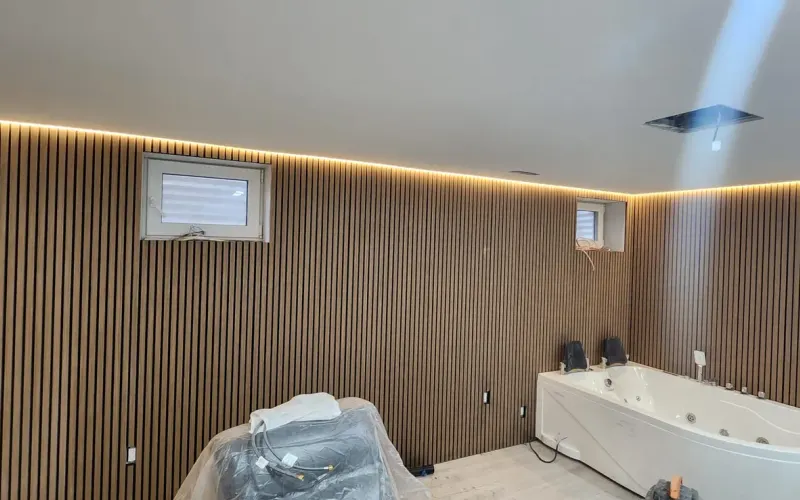
Basement Finishing
Basement apartment permit in Toronto: what the drawings have to show
What Toronto asks for in a basement apartment permit: the 45% zoning rule, each drawing sheet and form, and what gets measured in the house first.
Read the guide
What a turnkey renovation contract should cover in Toronto: trades, materials, permits, disposal, the handover package, and the words that quietly shrink it.
Contracts · October 8, 2026 · 8 min read
A turnkey renovation is sold with a simple picture: you hand over the house, and later you get it back finished, with nothing left for you to organise. The word itself has no legal definition in Ontario. It means exactly what your contract says it means, and two contracts that both say "turnkey" can describe very different amounts of work and responsibility.
This guide sets out what the word should cover, where it usually stops, and how to read the wording so the gaps are found on paper rather than in the middle of the job. It is written for houses and condos in Toronto and the GTA.
In a renovation, turnkey should mean one company is responsible for everything needed to deliver the finished space: the trades, the materials, the permits and inspections, protection of the house, disposal, final cleaning and the handover. You make decisions and approve changes. You should not be the person who books the plumber, chases a late delivery or finds out a tile was never ordered.
The useful test is simple. For every task on the job, ask who is responsible if it is late, wrong or missing. In a true turnkey contract the answer is the contractor every time, except for items the contract names as yours.
Most renovations are hired in one of four ways. They differ less in who swings the hammer than in who carries the gaps between trades: the missing blocking, the late cabinet, the inspection nobody booked. Turnkey puts all of those gaps on the contractor; the other arrangements leave some or all of them with you.
| Arrangement | Who runs the trades | Who buys the materials | Who owns a gap between trades |
|---|---|---|---|
| Turnkey | The contractor, all of them | The contractor, from your approved selections | The contractor |
| Labour only | The contractor | You, delivered on the right day | Shared, and argued about when a product arrives wrong |
| Separate trades | You, one contract per trade | Each trade, or you | You |
| Design by others, build by contractor | The contractor, to someone else's drawings | Depends on the contract | Split between designer and contractor where the drawings are silent |
None of these is wrong. A homeowner who already has a trusted electrician, or who wants to source every fixture personally, may be better served by labour only. The point is to know which one you are signing, because a contract titled "turnkey" can quietly read like labour only once you reach the exclusions.
A turnkey contract should list the work from demolition to handover and, alongside it, the services that hold the job together: ordering and receiving materials, booking inspections, protecting the house, removing waste and cleaning. Those services are what you are paying a single contractor to take off your hands, so each one belongs in writing.
| Responsibility | What the contract should say | What happens when it is silent |
|---|---|---|
| Ordering and receiving | The contractor orders from your selections, checks each delivery and handles returns of damaged items | A chipped vanity sits in the garage while you phone the supplier |
| Licensed trades | Electrical, plumbing and HVAC named as included, done by licensed trades | A separate invoice for the electrician, or work done without the right licence |
| Permits and inspections | Who applies, who pays the fees, who books each inspection and who closes the permit | An open permit on your property record that surfaces when you sell |
| Protection and dust control | Floor and stair protection, dust walls, covered vents in rooms that stay in use | Scratched hallway floors and drywall dust through the furnace |
| Waste and disposal | Bins or haul-away included, and where a bin may sit | A pile of old cabinets left for you, or a bin on the street without a permit |
| Making good | Patching and painting where the work touched adjacent rooms or the ceiling below | A finished kitchen next to a hallway with fresh holes in it |
| Final clean and handover | A construction clean, a walk-through, and the documents listed further down | Dust on every surface and no record of what was installed |
If you are comparing several bids, our guide on telling a good contractor quote from a bad one covers allowances and payment stages, which matter just as much in a turnkey job.
Even a genuine turnkey contract has edges, and the honest ones name them. These items are commonly outside the scope unless the contract brings them in. None is a problem as long as both sides know about it before work starts.
Not on its own. Turnkey describes who is responsible; the price can still be fixed, a stated estimate, or partly made of allowances for items you have not chosen. What protects you is a defined scope with named products, and a written change process, whatever the label on the front page says.
Ontario's Consumer Protection Act helps here. If a contractor gives you an estimate, the Act says they may not charge more than 10 per cent above it unless you agree to the higher amount. Changes you request are a different matter, which is why each one should be written up and signed before it is built. A contract signed in your own home rather than at the contractor's office is also a direct agreement under the Act, which gives you a 10-day cooling-off period.
Vague: "Turnkey kitchen renovation as discussed."
Clear: "Contractor supplies and installs the cabinets, counters, backsplash tile and plumbing fixtures listed in Schedule A; applies for and closes the building permit; arranges ESA inspection of the electrical work; removes all demolition waste; and completes a final clean. Owner supplies the four appliances listed in Schedule B; Contractor receives, installs and connects them."
The second version is longer, but every sentence in it can be checked on site. That is the whole difference between a label and a scope.
Handover is where turnkey proves itself. The house should be clean, every system should work, and you should be given a folder of the records you will need later, when something fails, when you insure the house or when you sell it. Ask for this list to be part of the contract, not a favour at the end.
A few short phrases move work back onto you without looking like exclusions. Read the contract once looking only for them. Each one is fine if you agreed to it, and a problem if you only notice it when the work stops.
Every line marked this way is yours to buy, deliver on time and replace if it arrives damaged. Count them. A turnkey contract with a long "by owner" list is closer to labour only.
The contractor fits the product but is not responsible for choosing, ordering or the product itself. If the faucet leaks from its own cartridge, that is between you and the store.
Coordinating with your electrician is not the same as including electrical work. The phrase usually means another contract, paid by you, that the contractor will schedule around.
"Ready for countertop" or "ready for paint" means the work stops at that stage. Somebody still has to template, fabricate and install the counter, or paint the room. Check who.
Turn the word into a list before you sign: the scope, the products, the services, the exclusions and the handover documents. Then hold payments to stages you can see, and keep every change in writing. A contractor who means turnkey will be comfortable writing all of it down; reluctance to do so tells you how the word is being used.
Art Style Construction runs full projects across Toronto and the GTA as a general contractor, from single rooms to whole-home renovations and kitchens. If you are planning one, book an on-site consultation and bring the contract questions with you; we would rather settle them on paper than in the middle of your job.
It should mean one contractor is responsible for delivering the finished space: trades, materials, permits and inspections, protection, disposal, cleaning and handover. The word has no legal definition in Ontario, so it only covers what the written contract lists. Read the scope and the exclusions, not the label.
Not automatically. Turnkey describes responsibility, not pricing. The contract can still be a fixed price, an estimate or partly allowances. Under Ontario's Consumer Protection Act, a contractor who gives an estimate may not charge more than 10 per cent above it without your agreement; changes you ask for are priced separately.
Often not. Many contracts have the owner supply appliances. Even then, the contract should say who receives them, installs them, connects water and gas, and removes the packaging, because those small tasks are where turnkey jobs most often leave loose ends.
Ask for the closed building permit, the electrical inspection record, a list of every product and paint colour installed, manuals for appliances and equipment, spare tile, flooring and paint, and the signed-off deficiency list. Put this list in the contract so it is not left to goodwill.
Basement Finishing
What Toronto asks for in a basement apartment permit: the 45% zoning rule, each drawing sheet and form, and what gets measured in the house first.
Read the guide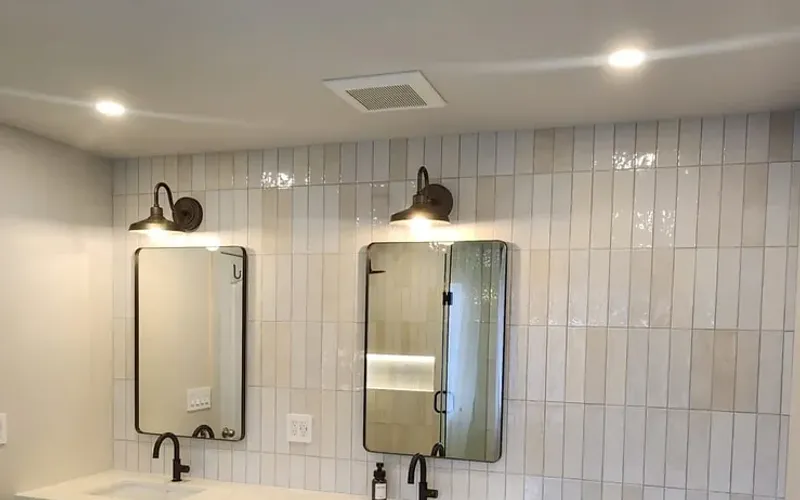
Bathroom Renovations
How many CFM a bathroom exhaust fan needs, why it moves less air than the box says, where the duct must end, and how to test the fan you have now.
Read the guide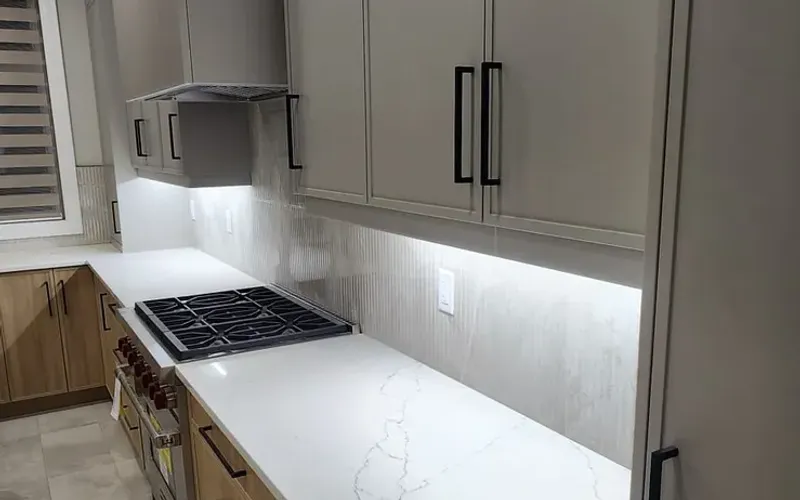
Kitchen Renovations
How to decide whether to paint, reface or replace kitchen cabinets: what to check inside each box, what every finding means, and what moves when boxes come out.
Read the guide
We will walk the space with you, tell you what it actually takes, and put it in writing.